Build Steps
1. Prepare Diodes
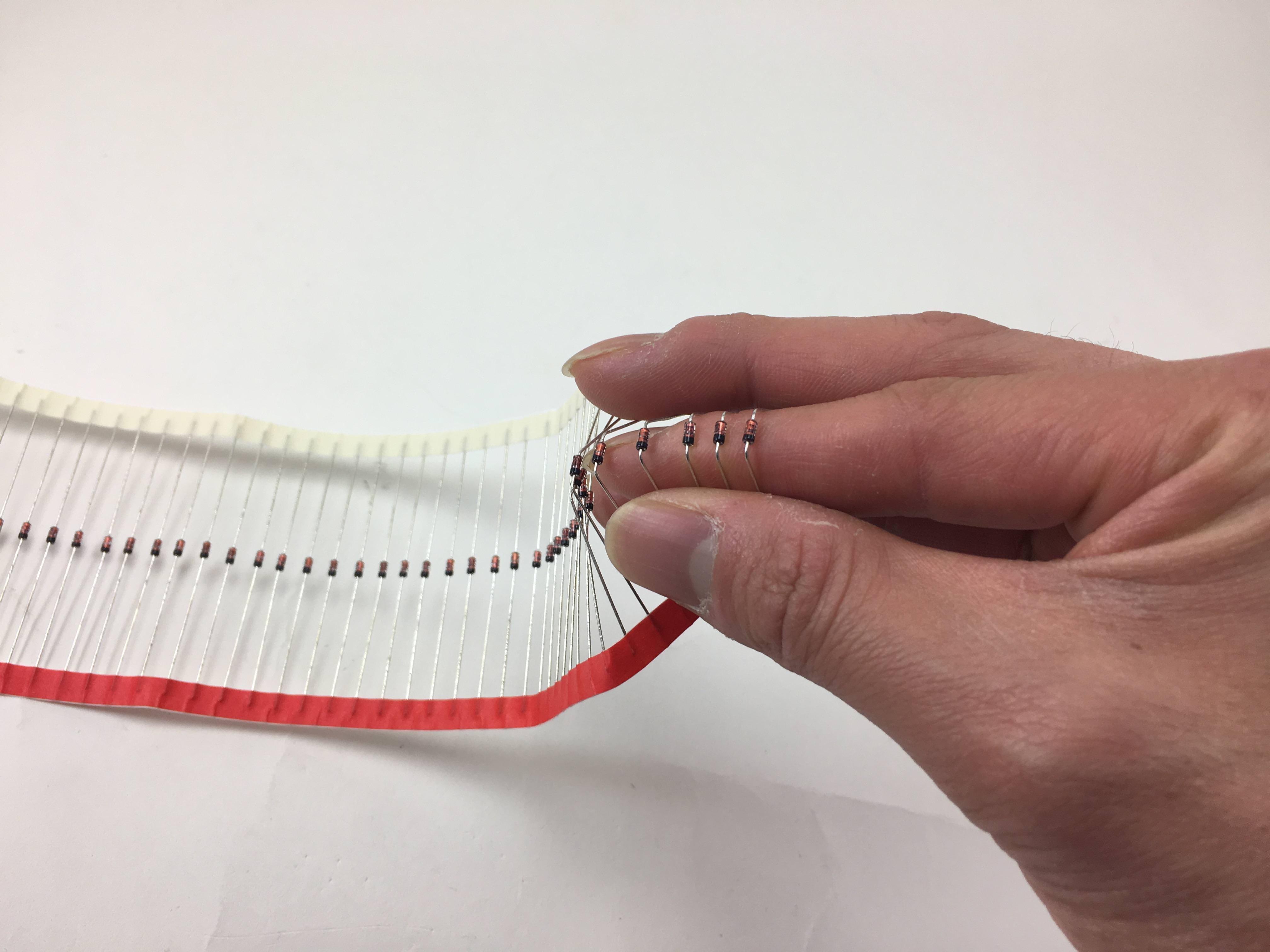
If you're using through hole diodes, bend them into shape. Here, I'm just bending it around my finger
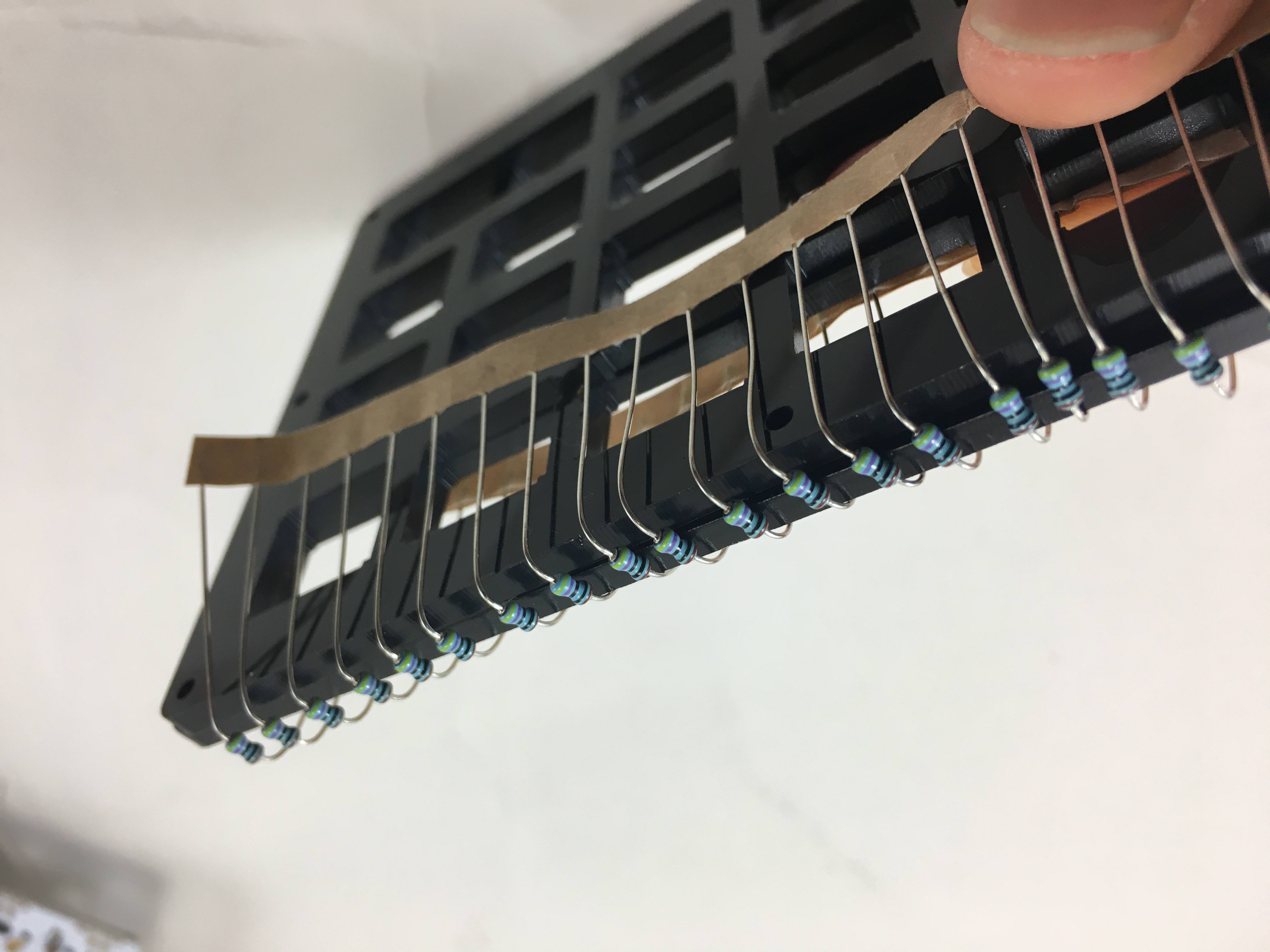
Another way to do it, resistors shown here
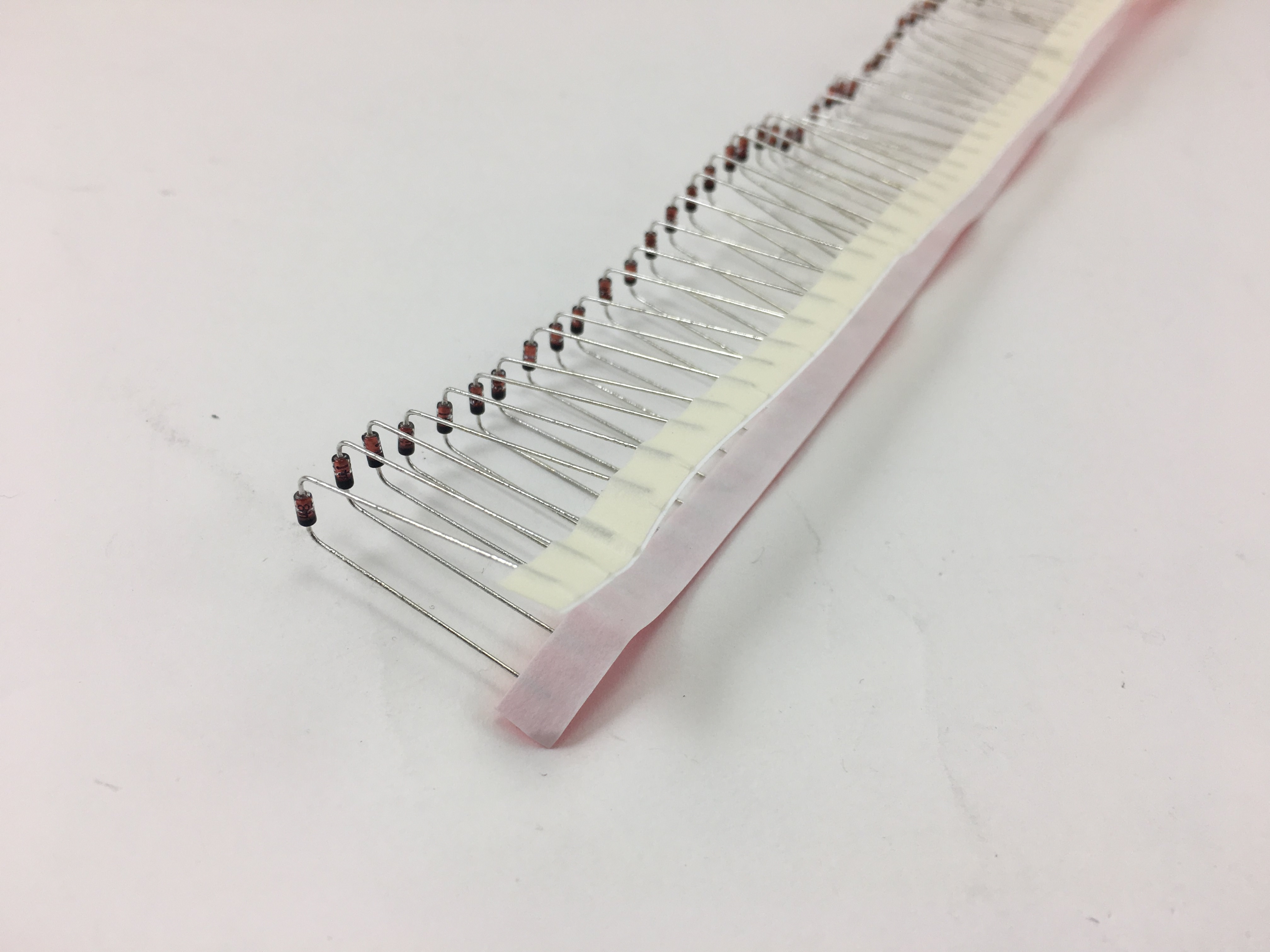
Strip of diodes bent
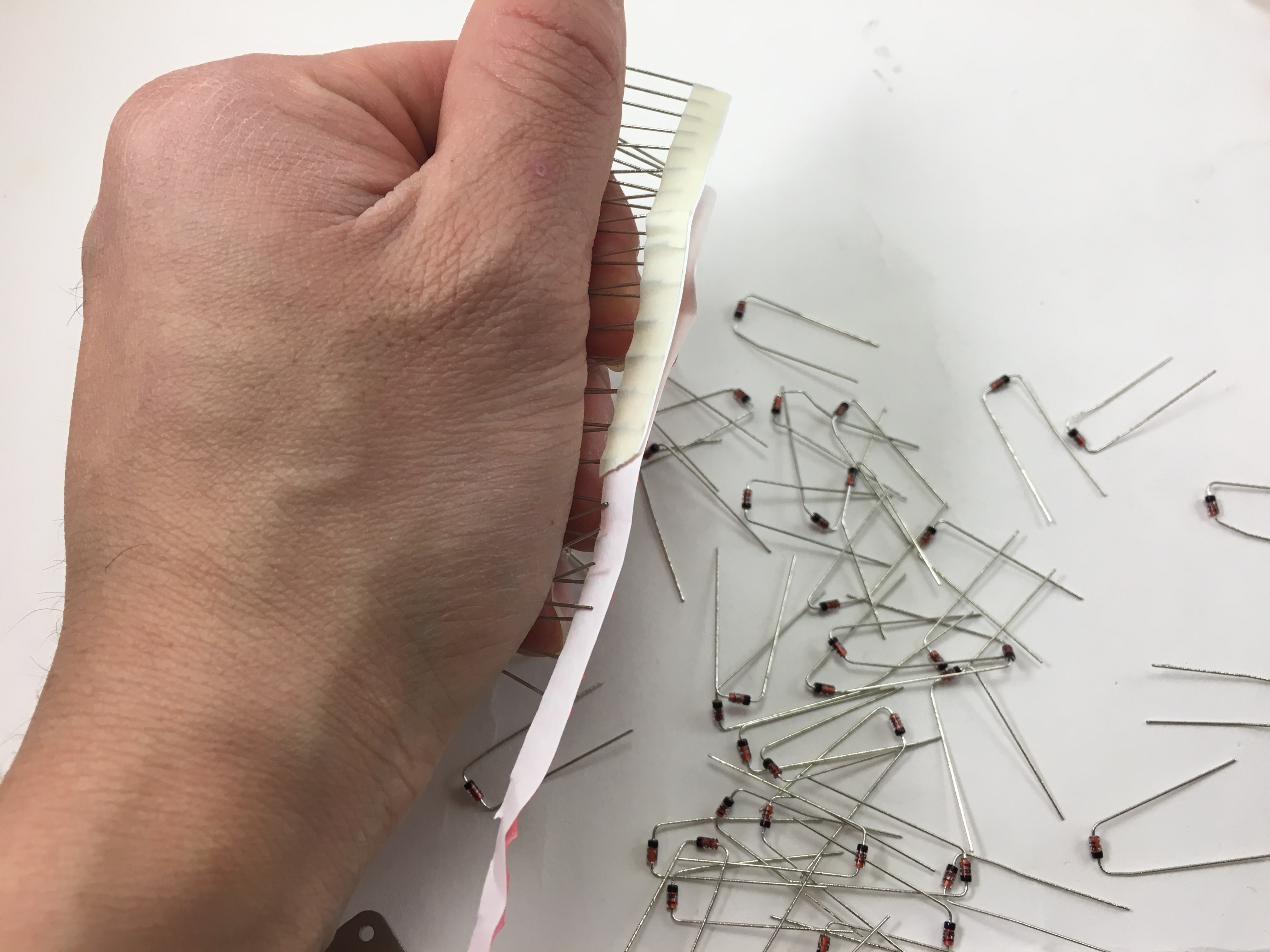
Ripping off the paper holding all the resistors together. Grip the diodes tightly so they don't bend as you're ripping the paper off.
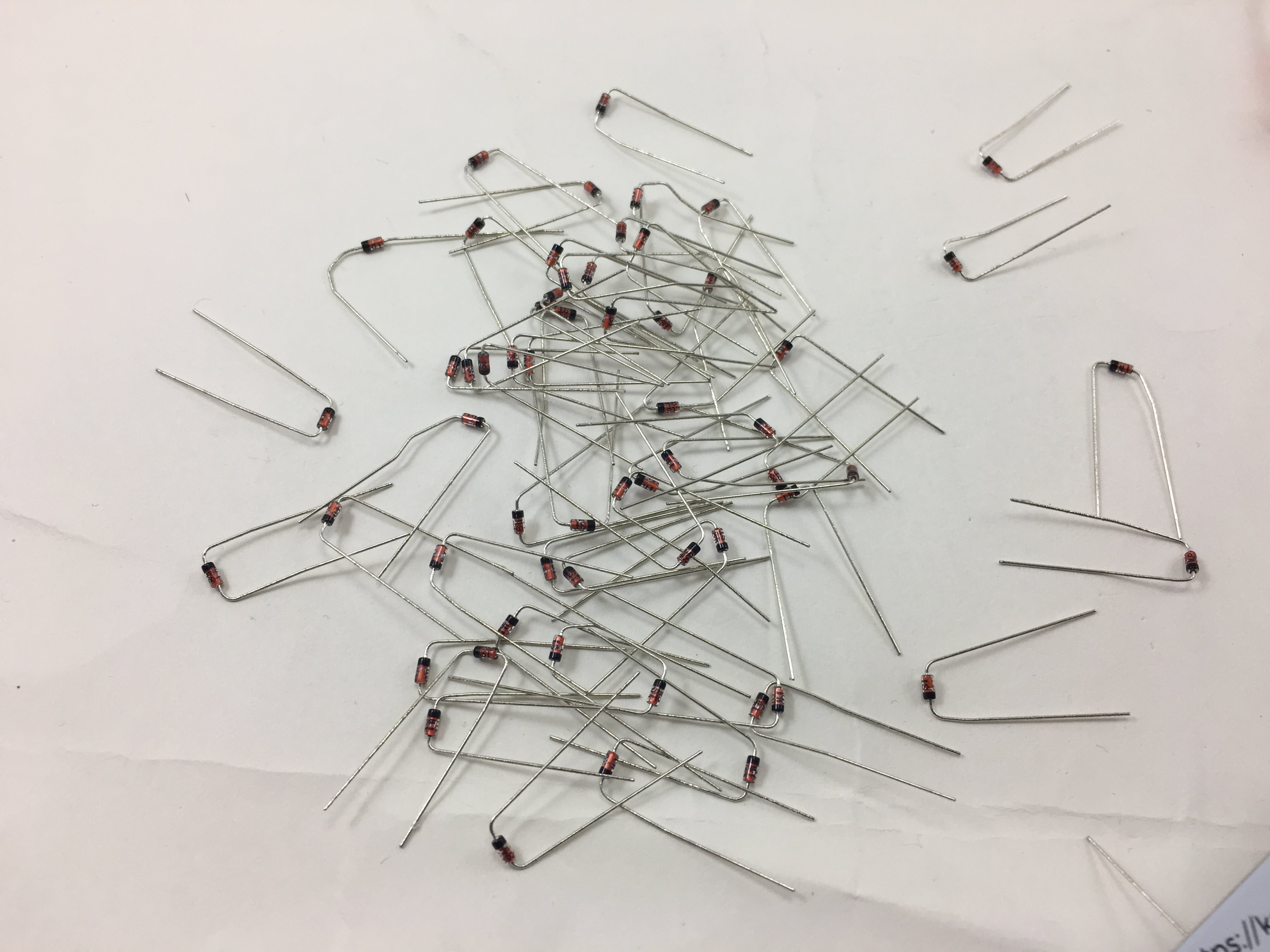
All separated from the paper
2. Install Diodes
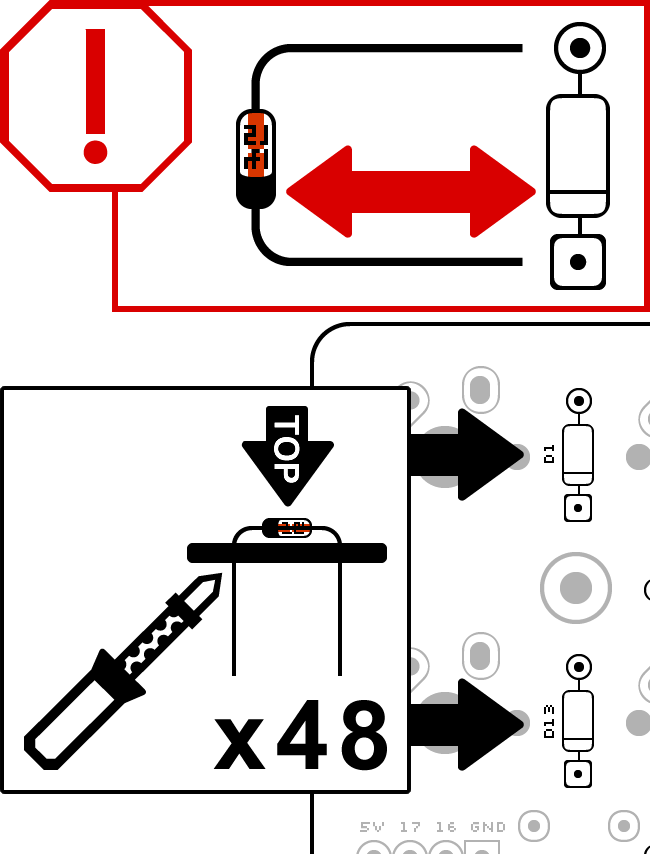
Install diodes to the top of the PCB. Solder diode pins where they stick out of the bottom of the PCB. 48 diodes must be used for all switches to function.
Diodes are direction sensitive. Be sure to install all diodes with the black side aligned to the side with the square solder pad and line through the diode outline (as shown in illustration).
3. Solder Controller Headers
4. Flash & Install the Controller
Controllers aren't included with our kits, so the firmware you need depends on the Pro Micro-compatible controller you chose when ordering (or sourced yourself). Download the Dumbpad firmware for your controller from the firmware page, then flash it:
| Your controller | Firmware page tab | File | How to flash |
|---|---|---|---|
| Helios or SVLinky (RP2040) | Helios / Svlinky | .uf2 | Double-tap the reset button (or hold BOOT while plugging in). A drive called RPI-RP2 appears; drag the .uf2 onto it. |
| StemCell (STM32) | StemCell | .uf2 | Double-tap the reset button. A drive appears; drag the .uf2 onto it. Check the StemCell page for any jumpers your board needs. |
| Classic Pro Micro (ATmega32U4) | Pro Micro | .hex | Open the .hex in QMK Toolbox, tick Auto-Flash, then briefly short RST to GND (or press reset) to start flashing. |
Each controller has two firmware options:
- Default: standard QMK firmware with the keymap built in.
- VIAL: the same firmware, plus live key remapping in Vial without rebuilding anything.
Flash your controller before soldering it to the PCB, while it's still easy to handle. If it shows up as a drive (or flashes successfully in QMK Toolbox), it's working. If it doesn't, see Entering the Bootloader.